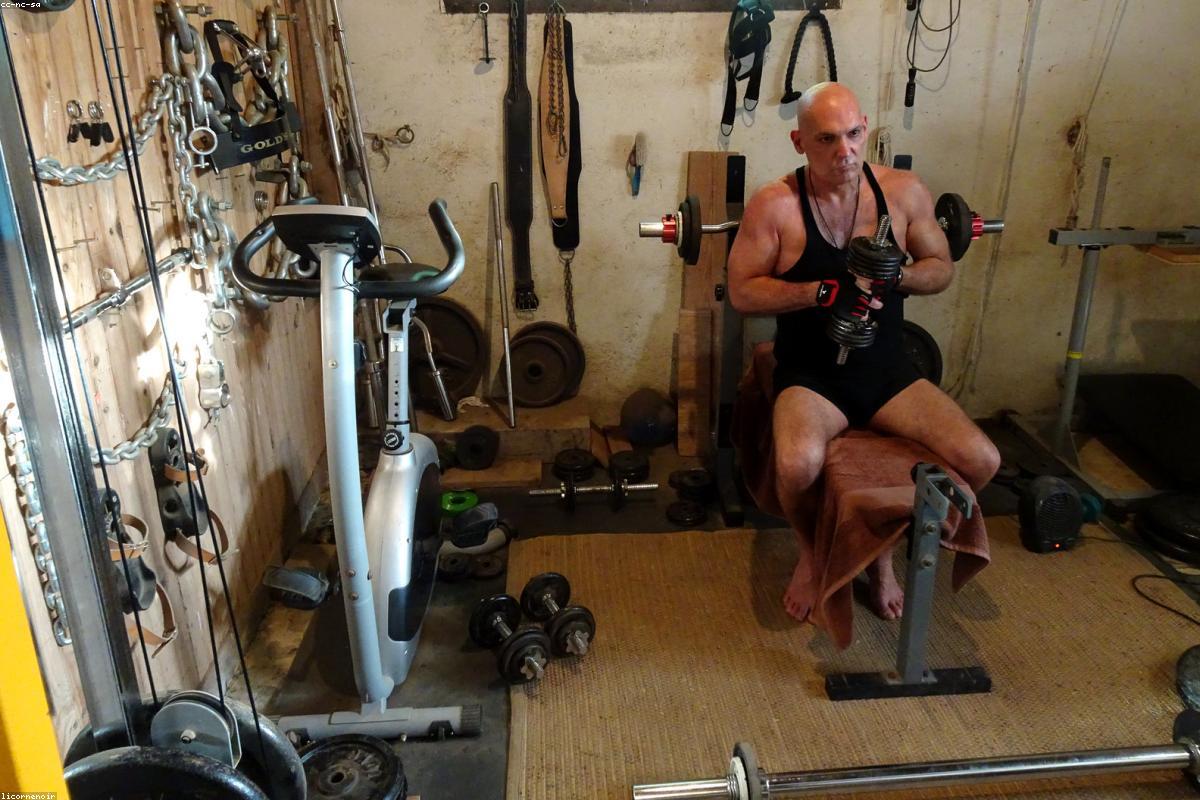
Men who don’t resistance train lose 3-8% of their muscle mass per decade after 30, with the rate accelerating after 60. The medical term for this is sarcopenia — age-related muscle loss — and it is not just a cosmetic concern. Muscle mass is associated with metabolic health, insulin sensitivity, bone density, immune function, and longevity. The 70-year-old who can’t get up from the floor without assistance, who fractures a hip in a minor fall, who can’t carry groceries — that outcome was largely determined by whether they maintained muscle mass through their 40s and 50s.
Resistance training is the only intervention that reliably reverses sarcopenia. Dietary protein helps maintain it; cardiovascular exercise maintains metabolic health; but the progressive mechanical stress of resistance training is specifically what signals the body to maintain and build muscle tissue across the lifespan.
This makes strength training after 40 not a hobby or an aesthetic pursuit, but arguably the highest-return health investment available to middle-aged men. A 2022 analysis in the British Journal of Sports Medicine found that muscle-strengthening activity was associated with 10-17% reductions in all-cause mortality, cancer, and cardiovascular disease mortality — independent of aerobic activity [1].
What Happens When Men Don’t Train
The absence of resistance training stimulus produces predictable deterioration across multiple systems:
Muscle mass decline (sarcopenia). 3-8% per decade from age 30-60, accelerating to 15% per decade after 60. A sedentary man who had 180 lbs of lean mass at 30 may have 140-150 lbs by 60 — a 20-25% reduction that fundamentally changes metabolism, strength, balance, and functional capacity.
Metabolic rate reduction. Muscle is metabolically active tissue that consumes calories at rest. Each pound of muscle burns approximately 6-10 calories per day at rest. Losing 20-30 lbs of muscle over decades reduces resting metabolic rate by 120-300 calories per day — contributing to the fat accumulation that men attribute to “slowing metabolism” without understanding why.
Insulin resistance progression. Skeletal muscle is the primary site of glucose disposal — the tissue that clears glucose from the blood in response to insulin. As muscle mass declines, insulin sensitivity decreases, contributing to prediabetes and type 2 diabetes risk. Resistance training is one of the most effective interventions for improving insulin sensitivity, independently of weight loss.
Bone density reduction. Mechanical loading of bone — the kind that resistance training provides — stimulates osteoblast activity and maintains bone mineral density. Without this stimulus, bone density declines alongside muscle mass, increasing osteoporosis and fracture risk.
Testosterone suppression. Low muscle mass is associated with lower testosterone — and lower testosterone accelerates muscle loss, creating a self-reinforcing cycle.
Why Strength Training After 40 Is Different From Your 20s
More important: Because the physiological deterioration it prevents is accelerating, and the cost of postponing it compounds with each year.
Requires more recovery: The same workout demands 48-96 hours of recovery at 45 that demanded 24-48 hours at 25. Training 6 days per week with heavy compound lifts worked then; 3-4 times per week is appropriate now.
Requires more warmup: Cold joints and tendons at 45 are significantly more vulnerable than at 25. A thorough warmup isn’t optional overhead — it’s injury prevention.
Requires more technique precision: The connective tissue injuries that are manageable at 25 become career-ending at 45. Proper form under load isn’t just efficiency — it’s the difference between training for decades and being sidelined repeatedly.
Produces equally significant results: The percentage gains from resistance training in men over 40 are comparable to those in younger men — particularly in the first 1-2 years of serious training. The rate of absolute progress may be slower, but the training produces genuine, meaningful improvement at every decade.
Building the Program
The Foundation: Four Movement Patterns
An effective strength program for men over 40 is built around four fundamental movement patterns that train the entire body with minimal redundancy:
1. Squat pattern (quad-dominant lower body):
- Back squat, front squat, goblet squat
- Bulgarian split squat, leg press as alternatives
- Primary muscles: quadriceps, glutes, core
2. Hip hinge pattern (posterior chain):
- Deadlift (conventional, sumo, Romanian)
- Hip thrust, good mornings as accessory
- Primary muscles: hamstrings, glutes, lower back, upper back
3. Horizontal push/pull:
- Bench press, dumbbell press (push)
- Barbell or dumbbell rows, cable rows (pull)
- Primary muscles: chest, shoulders, triceps / back, biceps
4. Vertical push/pull:
- Overhead press, incline press (push)
- Pull-ups, lat pulldowns, cable pull-downs (pull)
- Primary muscles: shoulders, triceps / upper back, biceps
Training each pattern once to twice per week, with adequate recovery between sessions, provides comprehensive muscular stimulus without overuse injury risk.
Progressive Overload
The principle that drives strength gains at any age: progressively increase the training stress over time. The body adapts to a given stimulus; increasing that stimulus drives further adaptation.
Methods of progressive overload:
- Add weight: increase the load by 5-10 lbs when you can complete all prescribed reps with good form
- Add reps: if the target is 3×8, progress to 3×10 before adding weight
- Add sets: increase from 3 to 4 sets at the same load
- Reduce rest periods: same load and volume with shorter rest requires more metabolic work
- Improve technique: moving the same weight more efficiently reduces compensation and increases target muscle stimulus
For men over 40, adding weight conservatively — every 2-4 weeks rather than every session — is more sustainable and reduces injury risk. The goal is progress over months and years, not weeks.
Rep Ranges for Men Over 40
Traditional heavy powerlifting (1-5 rep range) is effective for strength but carries higher injury risk for men with limited technical mastery or joint sensitivity. A slightly higher rep range (8-15 reps) achieves comparable hypertrophic and strength outcomes with lower per-rep load and reduced spinal and joint stress.
Research by Schoenfeld and colleagues found no significant difference in muscle hypertrophy between 8-12 rep ranges and 25-35 rep ranges (as long as sets were taken to near failure) — which means men with joint sensitivity can train effectively at loads far below their 1RM [2].
The practical protocol:
- 3-4 sets per exercise
- 8-12 reps for major compound lifts (getting the last 2-3 reps challenging but achievable with good form)
- 12-20 reps for accessory isolation work
- Last set of each exercise should feel genuinely challenging — if the final rep isn’t difficult, the weight is too light
Sample Weekly Template
Monday: Lower Body (Squat Focus)
- Warm-up: 10 min light cardio + hip mobility
- Back squat or goblet squat: 4×8-10
- Romanian deadlift: 3×10-12
- Split squat or step-up: 3×10 each leg
- Core work: 3×15
Wednesday: Upper Body Push/Pull
- Warm-up: shoulder mobility, band pull-aparts
- Bench press: 4×8-10
- Barbell or dumbbell row: 4×10
- Dumbbell shoulder press: 3×10-12
- Cable row or face pulls: 3×15
Friday: Lower Body (Hip Hinge Focus)
- Warm-up: hip mobility, light deadlift
- Conventional deadlift: 4×5-6 (heavier, lower rep)
- Hip thrust or glute bridge: 3×12-15
- Leg press: 3×12-15
- Walking lunges: 3×12 steps
Saturday or Sunday (optional): Upper Body Vertical
- Overhead press: 3×8-10
- Pull-ups or lat pulldown: 4×8-10
- Incline press: 3×10-12
- Bicep and tricep accessory: 2-3×12-15
Form and Injury Prevention
Technique over ego. The man who squats 225 lbs with perfect depth and neutral spine builds more muscle and sustains fewer injuries than the man who squats 315 lbs with a rounded lower back and quarter-depth range of motion. Load your ego down; load the movement properly.
Learn before you lift heavy. If you’re returning to lifting after years away, or starting for the first time, spend 4-8 weeks learning movement patterns with light loads before adding meaningful weight. Form mastery at light loads transfers to form competence at heavy loads.
Video yourself. Most men significantly overestimate their form quality. Recording a training session from a side angle reveals compensations and errors that feel invisible from inside the movement.
Work with a coach. Even two or three sessions with an experienced strength coach can identify and correct technical errors that reduce effectiveness and increase injury risk. This investment pays off for years.
Key Takeaways
- Sarcopenia (age-related muscle loss) is preventable — resistance training is the only intervention that reliably reverses it
- Muscle mass is health infrastructure: metabolic rate, insulin sensitivity, bone density, testosterone support, and longevity are all tied to lean mass
- Strength training after 40 requires more recovery (48-96 hours between sessions targeting the same muscles) and more warmup — but produces equally meaningful results
- Build around four movement patterns: squat, hip hinge, horizontal push/pull, vertical push/pull
- Progressive overload drives adaptation — add load or volume conservatively (every 2-4 weeks) for sustainable long-term progress
- 8-15 rep ranges are highly effective and reduce joint stress compared to very heavy low-rep work — no need to max-out to build significant muscle
- Technique over load — proper form at submaximal weight outperforms ego loads that compromise movement quality
Related Articles
- Fitness & Exercise for Men Over 40: The Complete Guide
- How Exercise Needs Change After 40
- Recovery After 40 — Why You Need More of It
- Exercise and Testosterone — Which Types Work Best
References
Shailendra P, Baldock KL, Li LSK, et al. Resistance training and mortality risk: a systematic review and meta-analysis. American Journal of Preventive Medicine. 2022;63(2):277-285. PubMed
Schoenfeld BJ, Grgic J, Ogborn D, et al. Strength and hypertrophy adaptations between low- vs. high-load resistance training: a systematic review and meta-analysis. The Journal of Strength and Conditioning Research. 2017;31(12):3508-3523. PubMed
Peterson MD, Rhea MR, Sen A, et al. Resistance exercise for muscular strength in older adults: a meta-analysis. Ageing Research Reviews. 2010;9(3):226-237. PubMed
This article is for informational purposes only and does not constitute medical advice. Always consult a qualified healthcare provider before making changes to your health routine.